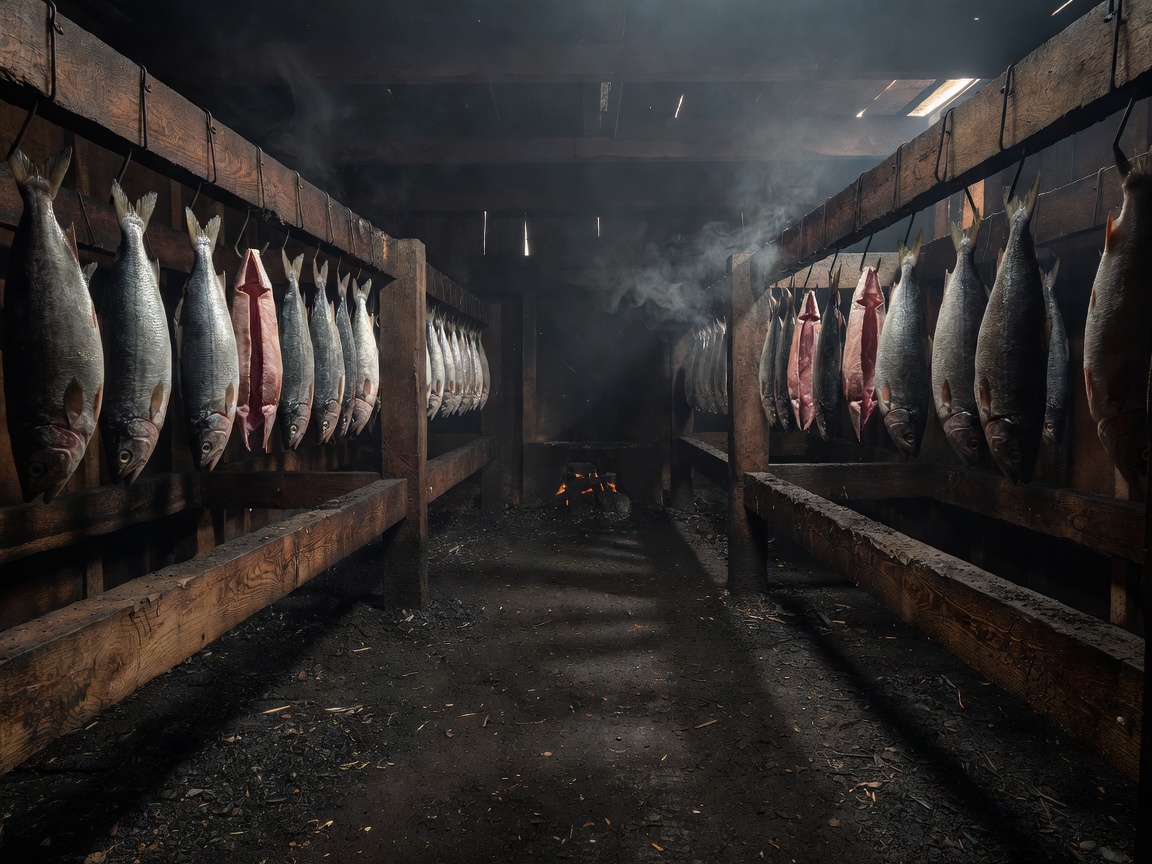
 Arbroath / haddock / hot smoke
Product first
The protected Smokie provides a defined starting point for comparing local businesses.
Read the Arbroath notesWorkshop ledger / people and practice
A good producer profile explains what is made, how it is handled and which claims can be checked. Weathered brickwork is atmosphere; a clear account of the product is evidence.
Arbroath / haddock / hot smokeThe protected Smokie provides a defined starting point for comparing local businesses.
Read the Arbroath notes Grimsby / cod and haddock / cold smoke
Traditional chimney smoking connects architecture with a documented production process.
Read the Grimsby notes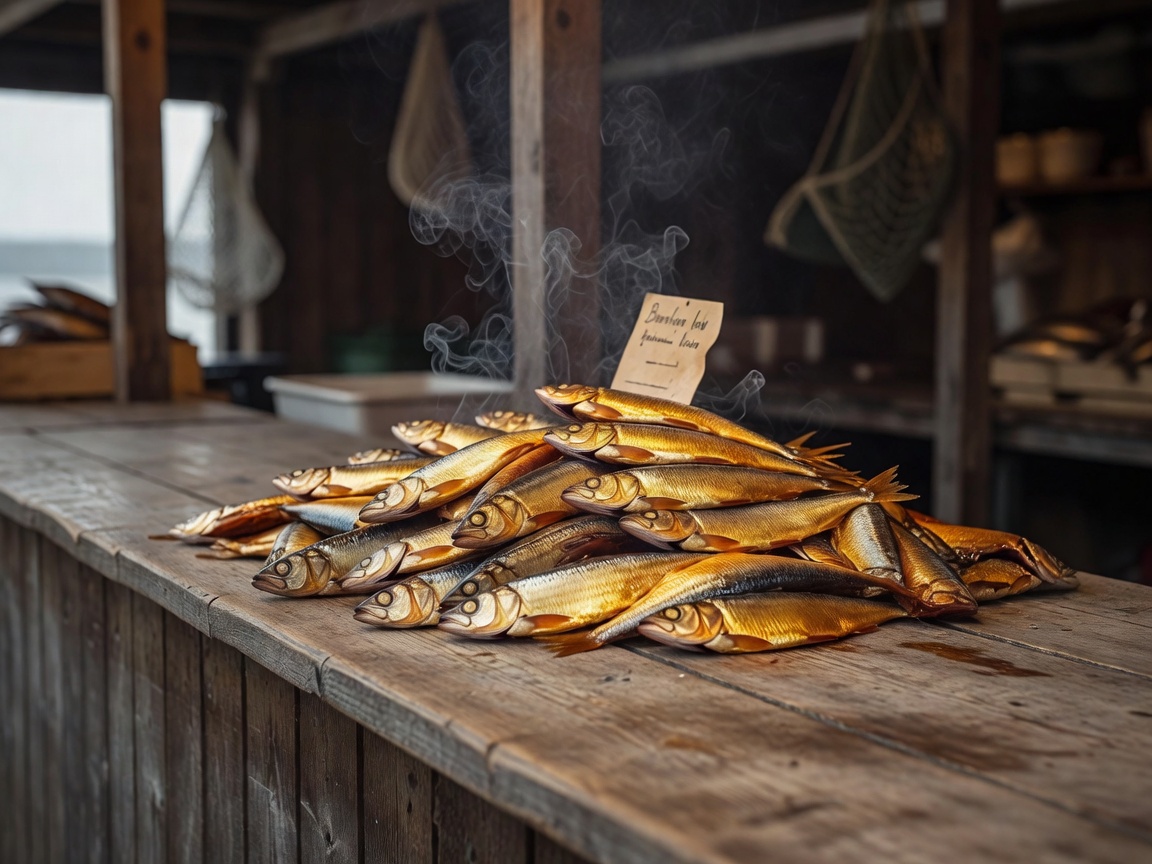 Bornholm / herring / hot smoke
A local dish can open a conversation without answering every question about the catch.
Read the Bornholm notesSpecialist seafood businesses often combine several roles: processor, wholesaler, shop, restaurant or visitor attraction. Before planning a visit, establish which role you are encountering. A counter may sell products made elsewhere, and a working production site may not admit visitors. Neither fact disqualifies the business, but both change what a useful visit looks like.
The names below are research starting points, not a ranking, paid placement or claim of personal inspection. We do not assert that every named business currently offers tours, accepts walk-in customers or makes every product associated with its region. Check its own current information before travelling, particularly for opening arrangements and seasonal availability.
Iain R. Spink and Arbroath Fisheries are useful names to research in connection with Arbroath Smokies. Begin with the shared product identity, then separate the individual business’s range, smoking arrangements and sales format. The protected geographical name is more precise than the broad phrase “Scottish smoked fish”.
Ask whether the fish you are buying is the protected product, how it is packed and what storage instructions accompany it. If smoking demonstrations are advertised, confirm the arrangements directly rather than assuming that a traditional method is performed continuously for visitors. A demonstration also cannot show every control used in commercial production.
For a tasting comparison, keep the serving conditions similar. A fish eaten warm near the smoker and one chilled for a journey will present differently. That difference need not indicate better craftsmanship; temperature and handling affect aroma, texture and your impression of moisture.
Alfred Enderby is a well-known research starting point for Grimsby’s traditional smoking trade. The broader subject is Grimsby Traditional Smoked Fish, whose protected identity links particular raw materials and a defined method to the area. Read the registered specification alongside a producer’s own description rather than treating either as a substitute for the other.
One practical question should come early: does this item need cooking? Traditional smoked cod and haddock are not interchangeable with ready-to-eat smoked salmon. Ask for the intended preparation instructions and the storage requirements of the actual purchase. A fishmonger’s display may contain several product types with different answers.
Chimneys and old smokehouses help explain how a trade developed, but age is not a safety certificate. A convincing modern account should also address traceability, temperature control and protection after smoking. The most useful producer story holds continuity and present-day responsibility together.
Gudhjem Røgeri and Svaneke Røgeri are names readers may encounter when researching Bornholm’s smokehouse culture. A restaurant menu can introduce smoked herring and local serving customs, but it is not a complete account of raw-material sourcing or production. Ask which items are smoked by the business and which are supplied by others.
When a dish is presented as a regional speciality, separate its components. The smoked fish, the bread and the garnishes may each have different origins. This is not a reason to reject the dish; it is a way to appreciate what the establishment actually contributes without adding an unsupported story of wholly local ingredients.
Pinney’s of Orford offers another useful research direction, in a place where smoking sits alongside a wider seafood trade. Orford’s setting on the Suffolk coast makes it tempting to equate every product with the immediate landscape. Instead, investigate species by species and distinguish catch origin from processing location.
A mixed seafood business can be especially instructive because not every item receives the same treatment. Oysters, smoked fish and other products bring different handling requirements. Avoid transferring instructions from one purchase to another simply because they came from the same counter.
Ask what the species is, where the raw material came from, whether the fish is cold- or hot-smoked, whether it is ready to eat, and how it must be kept. These questions are concise enough for a busy counter and concrete enough to improve your decision. More detailed questions about fuel and curing can follow when staff have time.
Respect production boundaries. Hygiene rules may limit access, photography or close inspection of racks. A refusal to open a working area is not evidence of secrecy. Research can combine a public description, a label, a protected specification and a courteous conversation without demanding entry to the processing room.
Continue with reading a smoked-fish label for the decisions that matter after the visit. For protected product definitions, consult the UK official register. Producer ranges and visitor arrangements can change independently of those definitions.
A memorable conversation is useful. Written storage and preparation instructions are essential. Build your buying checklist.
Your privacy choices Some cookies are needed for the site to work. Others help us understand how it is used. You can change your choice later. Cookie policy